Devotional
Posted: 10/31/2025
Do you remember the story of the falling apple that hit Isaac Newton on the head?
Sir Isaac Newton, best known for the Universal Law of Gravity, is also credited with formulating the Laws of Motion. His Third Law states that for every action, there is an equal and opposite reaction. We believe this to be the natural law that governs not only the elements of this planet but also life and human responses. “Eye for an eye,” “tariff for a tariff,” “hatred for hatred,” “aggression for aggression.” Does this sound familiar?
This “reciprocity” does not affirm complementarity but emphasizes opposite polarities. We learn that reacting with the same force is not always the most effective response. Rather than releasing the pressure, it can build up resistance and burst in an even more dangerous way.
In life, we are often provoked to react to many things that transpire around us—whether in politics, religion, society, or personal life. Our seemingly “fair” reactions may often cause more harm than good because they are impulse-driven and carry the wounds and hurts of our soul.
In Aikido, which literally means “the way of harmonizing energy,” athletes are trained to use the opponent’s energy and balance against them instead of meeting force with force. Tai Chi shares a similar principle of using softness and flow to overcome strength. This teaches us that real power lies not in confrontation but in inner stillness. We often don’t realize that fire cannot be extinguished with fire. Just as in Aikido or Tai Chi, subtle reactions or responses may be more impactful than powerful blows.
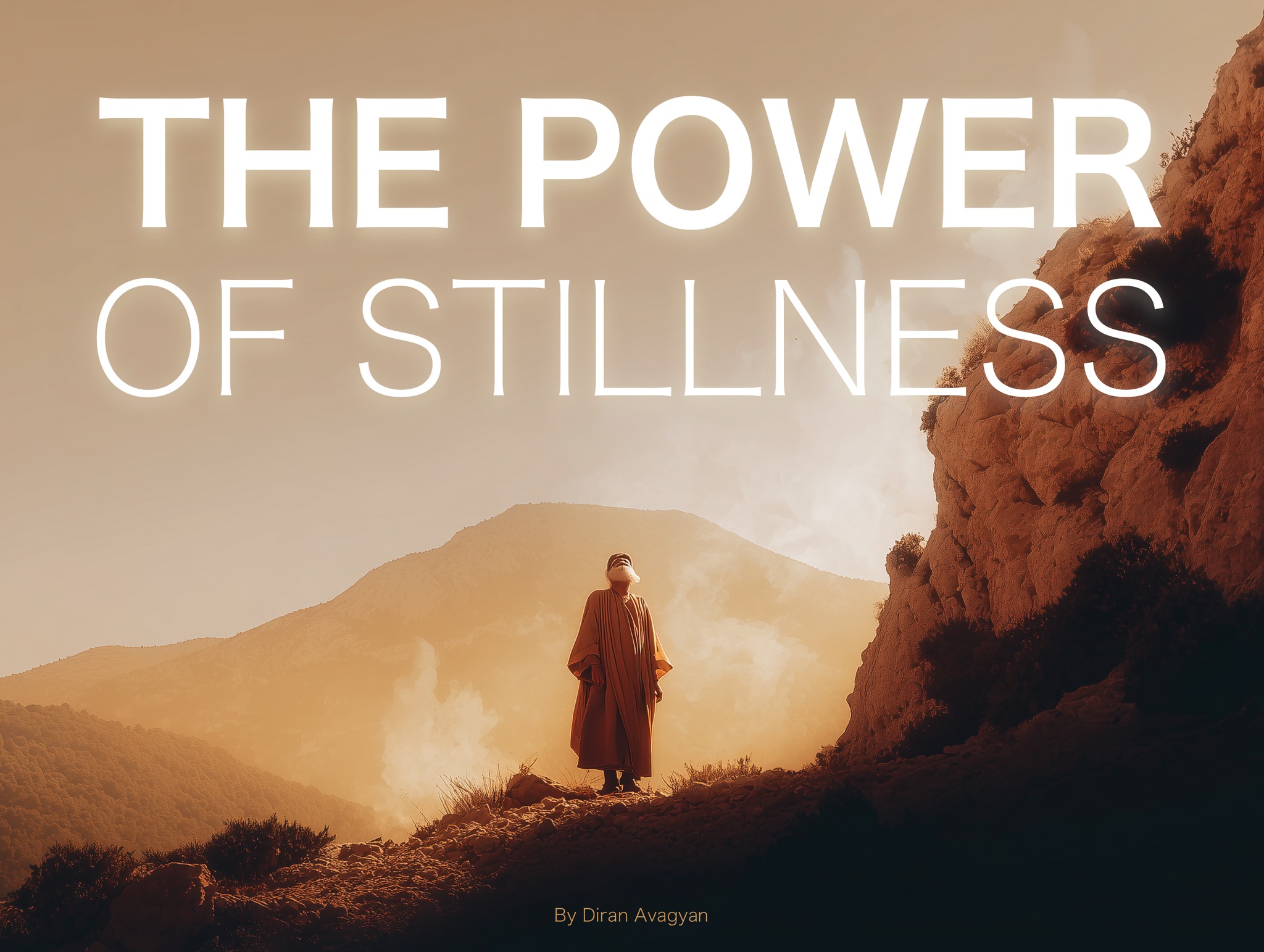
God taught this lesson to the Prophet Elijah. When he went on the mountain to encounter God, he was surprised that God was not in the fierce wind, in the earthquake, or in the fire—but in the still small voice (1 Kings 19:11–13). Elijah encountered God in a whisper.
Every time we are tempted to react, let us pause and be still. Let us be mindful of the pushback effect. Let us use self-awareness and prudence to choose when and how to respond—encountering God in the stillness and in the quiet moment of reflection that stands between action and reaction.